







Soňa Hříbalová
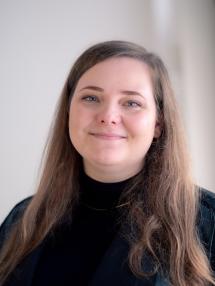 Tell us about yourself:
I currently work at the Department of Glass and Ceramics as an academic staff member, focusing mainly on research into lead-free piezoelectric ceramics. I also work part-time at the Doctoral Studies Office. So I have the opportunity to combine research, teaching and other activities that help shape our environment, which brings me joy – especially at moments when things in the lab don’t go entirely to plan.
What do you enjoy most about being a scientist?
I like that every day looks completely different and that this work never becomes monotonous. How many people can say that every day at work they have the chance to discover something new? It’s often a challenge, especially when for some reason there is suddenly too much to do, but that’s part of it. I’m also glad that I get to work with talented students, to whom I try to pass on what I have learned so far.
What do you consider your greatest achievements so far?
If I were to pick from my CV, it would be the Fulbright-Masaryk Scholarship, which gave me the chance to gain experience in the United States, the Rector’s Award, and securing a Czech Science Foundation (GAČR) Standard Project shortly before completing my PhD. I’m also pleased that my dissertation work (focused on describing light scattering in transparent ceramics and on methods for modelling it) resulted not only in the traditional outcomes – a description of the phenomenon and improvements to current modelling approaches – but also in a practical “manual” on how to tackle the problem simply, which (hopefully) opens it up to the widest possible professional audience. Last but not least, I consider it a great achievement that I have managed to surround myself with great people.
Why did you choose research over industry?
Choosing the academic path came about naturally at the end of my master’s studies, when I attended my first scientific conference (which, despite my initial great apprehension, ended up captivating me), and through the subsequent development of my career during my PhD, which was quite strongly oriented towards basic research. Since I was doing well at reaching the milestones that matter for an academic career, I didn’t feel the need (at least not yet) to change direction.
What would you say to those considering a PhD at UCT Prague?
Your PhD will largely depend on how you set it up yourself and which group and supervisor you choose – this choice is really crucial, and it’s essential that you get along both professionally and personally. A huge advantage (and at the same time the most common pitfall) is that during a PhD you gain a great deal of responsibility and independence – it’s often the first time in your life that nobody will be strictly guiding you, and in some areas purely your own initiative will be expected (including in relation to your career). If you realise this in time and have enough discipline, you can achieve almost anything – and that’s what makes it worth it :-). UCT Prague is a great place for that.
What motivates you most in leading research projects and getting involved in research activities?
First and foremost, it’s the desire and the challenge of discovering something new, but another very important part of my motivation is working in a pleasant environment – then you easily put all the difficulties behind you and carry on.